

Wall Copper Oven Hood
A wall copper oven hood can turn the cooking area into the strongest architectural feature in the kitchen while supporting everyday ventilation above a gas or electric range. Because the hood is installed directly on the main cooking wall, its size, finish, texture, and insert preparation affect both function and style. At MyCustomCopper, the custom copper range hoods collection includes wall-mount, island, and under-cabinet designs in hammered or smooth copper, with patina choices, standard widths, and custom sizing. A well-planned copper oven hood can add warmth, remove visual flatness, and bring handcrafted character into rustic, farmhouse, Hacienda, Tuscan, Spanish Revival, Mediterranean, or transitional kitchens.
Post Summary
- Plan a wall copper oven hood
- Choose hammered or smooth finish
- Select patina and size
- Prepare insert details
- Match farmhouse or modern style
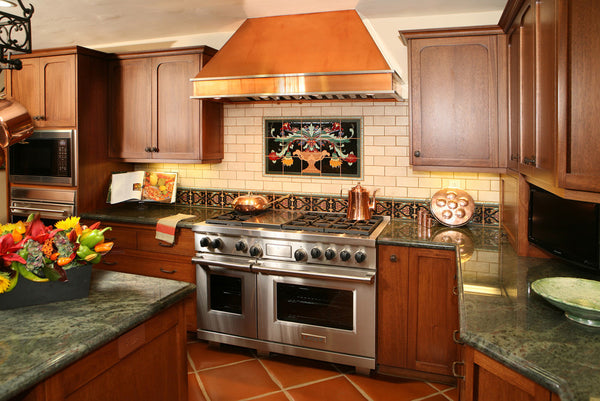
This lifestyle image shows a wall copper oven hood installed above a professional range in a warm kitchen. The wood cabinets, decorative tile backsplash, green stone counters, copper cookware, and terracotta floor show how copper can become a natural focal point in a traditional cooking wall.
Why a Wall Copper Oven Hood Works So Well
A wall oven hood sits above the range, usually between cabinets or centered on a backsplash. This position gives it immediate visual importance. Even before someone notices the countertops, flooring, or cabinet hardware, the hood often defines the kitchen’s personality.
Copper makes that focal point warmer and more distinctive. Instead of using a plain stainless cover or a painted cabinet hood, copper introduces depth, patina, and handmade surface variation. The result feels more personal and architectural.
Function with Strong Visual Value
A wall copper oven hood must still perform its basic job: helping manage smoke, steam, grease, heat, and cooking odors. The visual appeal should not replace proper ventilation planning.
The best design combines both needs. The exterior copper shell creates the style, while the internal insert, liner, blower, filters, and ducting determine daily performance.
Wall-Mount Installation Above the Range
Wall-mount installation is the most common option when the cooking appliance sits against a kitchen wall. This layout works well for ranges placed between cabinets, below a tile backsplash, or under a custom chimney section.
A wall hood can be finished on the front and sides, with the back designed to meet the wall cleanly. This makes it different from an island hood, which must be finished on all visible sides.
When Wall-Mount Is the Right Choice
Choose wall-mount installation when the range or cooktop is located along a main wall rather than in an island. This option is strong for traditional cooking walls, alcove ranges, farmhouse kitchens, and cabinet-centered layouts.
The related guide to copper kitchen hoods for a wall explains how wall hoods can become the key element homeowners notice first when entering the kitchen.
Hammered Copper Oven Hoods
Hammered copper is a classic choice for wall oven hoods because it adds visible handwork and surface movement. The hammer marks catch light differently across the hood, which gives the metal more depth than a flat finish.
This texture works especially well in rustic, country, Tuscan, Spanish Colonial, Hacienda, and farmhouse kitchens. It pairs naturally with wood cabinets, stone counters, handmade tile, iron lighting, and warm flooring.
Why Hammering Adds Character
Hammering helps the hood feel artisan-made. It softens reflections, creates organic variation, and prevents the copper surface from looking too industrial or flat.
For a product example, the handcrafted soft hammered copper range hood design shows a bell-shaped body, rectangular chimney, 16-gauge hammered copper, amber-brown patina, and wall-mount functional use.
Smooth Copper for Cleaner Kitchens
Smooth copper creates a more restrained look. It can be a better choice when the kitchen already includes patterned tile, decorative stone, busy wood grain, or strong cabinet details.
A smooth wall copper oven hood can still feel warm and custom, but it appears quieter. This makes it useful for transitional kitchens, modern rustic homes, contemporary spaces, and interiors that need copper color without heavy texture.
Choosing Between Hammered and Smooth
Choose hammered copper when the kitchen needs visible artisan texture. Choose smooth copper when the room needs warmth but should remain visually clean.
Both finishes can work beautifully. The right choice depends on cabinetry, backsplash pattern, lighting, counters, flooring, range style, and the amount of visual movement already present in the room.
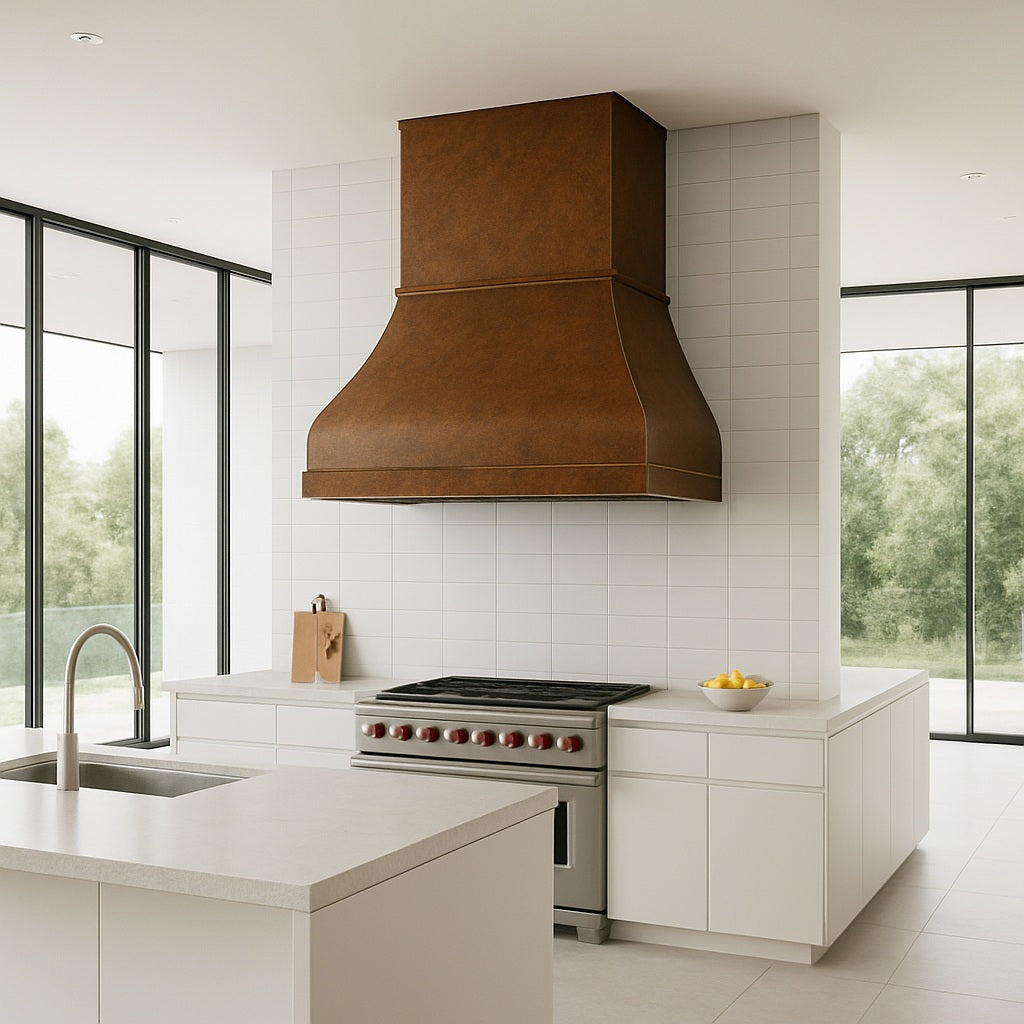
This lifestyle image shows a soft hammered copper range hood in a contemporary kitchen. The white cabinetry, white tile backsplash, stainless range, island sink, large windows, and bright open layout show how copper can warm a clean modern space.
Choosing the Right Patina
Patina controls the mood of the copper hood. A natural copper tone feels brighter and more lively. Antique and coffee finishes create deeper contrast. A dark patina can anchor a light kitchen, while a lighter tone can warm darker cabinetry.
The original wall copper oven hood post notes that patina can help the same hood work in vintage, modern, rustic, country, industrial, and farmhouse settings. This is one of copper’s biggest advantages.
Matching Patina to the Kitchen
For white walls and light cabinetry, a darker copper patina can add richness and balance. For kitchens with heavy wood, colorful tile, or rustic stone, a brighter or antique finish may prevent the room from feeling too dark.
Patina should coordinate with cabinet hardware, faucet finish, lighting, backsplash, countertops, and nearby metal accents. The hood should feel connected to the whole kitchen.
Custom Size and Proportion
A wall copper oven hood should be sized around the range, cabinet spacing, ceiling height, and room scale. A hood that is too narrow may look weak above the range. A hood that is too large may overpower the cabinets.
The current collection offers standard widths such as 30, 36, 48, and 60 inches, with fully custom sizing available for unique ranges, tall ceilings, special cabinet openings, and made-to-order kitchens.
Measurements to Confirm
Before ordering, confirm hood width, height, depth, ceiling height, cabinet spacing, backsplash height, range width, duct location, and insert model. Small details like trim, crown molding, and side clearances should also be measured.
The article on customized copper range hoods for kitchens explains why dimensions, insert brand, model number, and special instructions should be provided before production begins.
Ventilation Insert Planning
A copper hood shell is only one part of the system. The insert or liner inside the hood determines how the kitchen air is pulled, filtered, lit, and exhausted. This should be planned before the hood is fabricated.
Insert width, depth, height, duct outlet, filters, lights, blower capacity, and mounting instructions all affect the interior opening. Sending the insert specifications early helps the hood be prepared correctly.
Why the Insert Matters
A beautiful hood still needs the correct internal equipment. The insert affects smoke capture, cooking comfort, noise level, maintenance access, lighting, and installation requirements.
The guide to a custom copper hood with insert explains how the hood shell and ventilation equipment work together and why insert information should be reviewed before production.
Ducted and Ductless Options
A ducted wall copper oven hood vents air outside the home through ductwork. This is often preferred when the kitchen layout and local requirements allow exterior venting.
A ductless option filters and recirculates air back into the room. This can be useful in condominiums, remodels, apartments, or kitchens where exterior ducting is not practical.
When Ductless Makes Sense
Ductless installation can offer more location flexibility because it does not require a direct path to the exterior. However, the hood still needs a compatible recirculating setup and proper filter access.
The article on the ductless copper range hood option explains how recirculating wall hoods filter air and return it to the kitchen when exterior ducting is not available.
Design Styles for Wall Copper Oven Hoods
Wall copper oven hoods can be adapted to many kitchen styles. In farmhouse kitchens, copper warms white cabinets, apron sinks, wood floors, and simple backsplash tile.
In Hacienda and Spanish Revival kitchens, copper pairs with plaster, Talavera tile, iron lighting, arched details, and carved wood. In Tuscan kitchens, copper works with stone, terracotta, warm walls, and darker bronze hardware.
Rustic, Farmhouse, and Transitional Rooms
A rustic kitchen can support heavier hammering, deeper patina, straps, rivets, and decorative trim. A transitional kitchen may look better with a simpler silhouette and cleaner banding.
The design should match the room’s materials. The hood should coordinate with cabinet color, backsplash pattern, flooring, range finish, lighting style, and surrounding architecture.
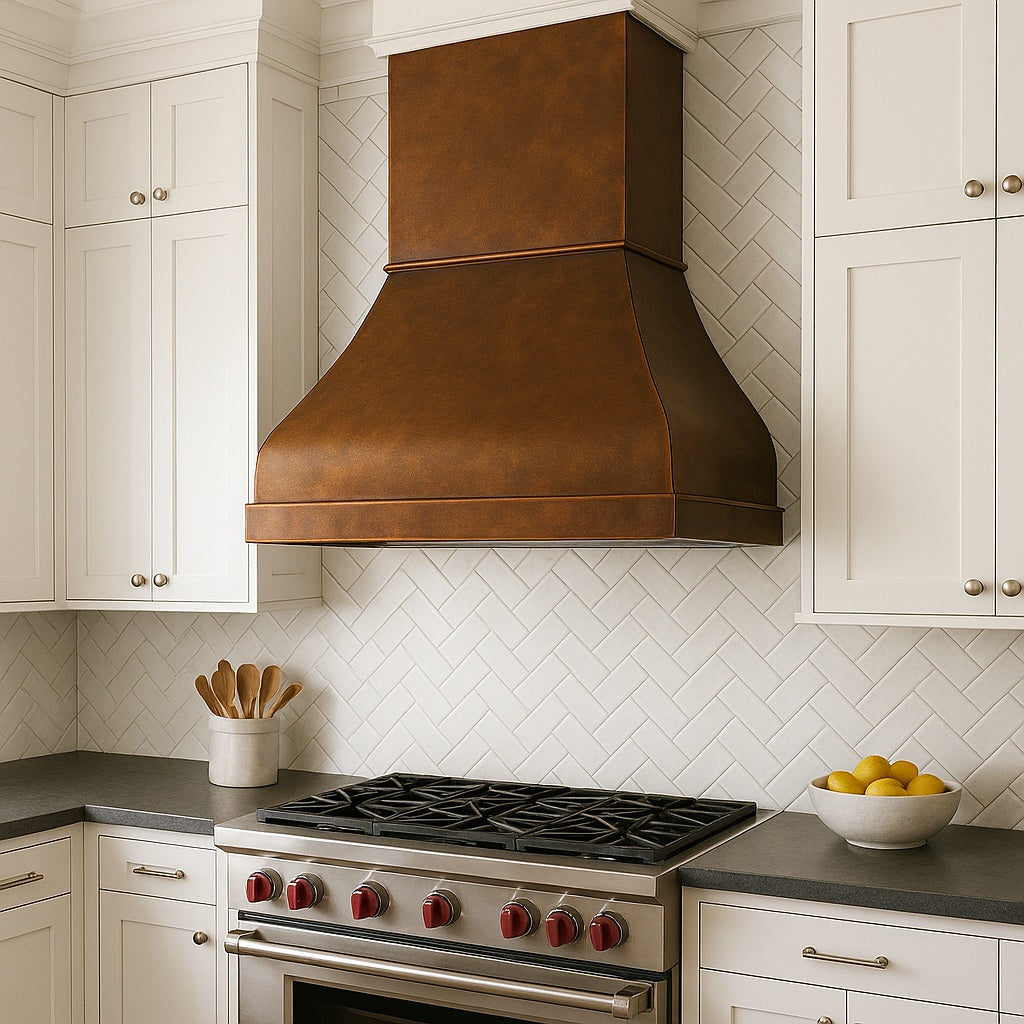
This lifestyle image shows a soft hammered copper range hood in a transitional kitchen. The cream cabinets, herringbone tile backsplash, stainless range, dark counters, brass hardware, and warm copper patina show how a wall hood can create contrast without overpowering the room.
Decorative Straps, Rivets, and Moldings
Decorative details help determine the final character of a wall copper oven hood. Straps, rivets, banding, crown molding, apron details, and trim can make the hood feel rustic, Spanish Revival, industrial, farmhouse, or more traditional.
These features should be selected carefully. A kitchen with simple cabinetry may benefit from stronger hood detail, while a kitchen with patterned tile or ornate cabinets may need a cleaner copper shape.
Using Detail with Balance
Straps and rivets can reinforce old-world character. Smooth bands and simple molding can create a more refined appearance. Decorative aprons can add personality, but they should not compete with every other surface in the kitchen.
Under-Cabinet and Tall Ceiling Considerations
The original post notes that copper oven hoods can be designed for tall ceilings or under-cabinet installation. These two conditions require different planning.
Tall ceilings may need a longer chimney or extension so the hood connects visually and functionally to the upper architecture. Under-cabinet installations need compact proportions and careful clearance below the cabinetry.
Planning the Surrounding Architecture
For tall ceilings, confirm the desired total height and whether the hood should reach the ceiling or stop below a crown detail. For under-cabinet placement, confirm cabinet depth, bottom height, and insert access.
A wall hood should look intentional within the architecture. It should not feel squeezed into the cabinet opening or disconnected from the ceiling line.
Installation Height and Cooking Comfort
Installation height affects both performance and comfort. The hood should be low enough to capture cooking fumes effectively but high enough for comfortable visibility and head clearance.
The collection guidance recommends mounting custom copper range hoods around 30 to 36 inches above the cooking surface for optimal performance. Local code, appliance instructions, and insert manufacturer guidance should also be reviewed.
Why Height Should Be Planned Early
If the hood is too high, smoke and steam may escape before reaching the insert. If it is too low, it may block sight lines or feel uncomfortable while cooking.
Height also affects the chimney, backsplash, cabinet proportions, and total visual balance of the cooking wall.
Care and Maintenance
A wall copper oven hood should be cleaned gently. Mild soap, warm water, and a soft cloth are usually enough for routine cleaning. Dry the surface after cleaning to help reduce spotting.
Avoid bleach, abrasive pads, harsh acids, ammonia, and aggressive metal polish. These products can scratch the surface, disturb the patina, or damage the finish.
Protecting the Patina
Copper is a living material, so some tonal movement should be expected over time. Heat, humidity, cooking oils, cleaning habits, and touch can all influence how the patina develops.
Gentle care helps preserve the finish while allowing the hood to gain natural character with use.
Ordering a Custom Wall Copper Oven Hood
A successful custom order begins with complete project information. Confirm width, height, depth, mount type, finish, texture, ducting, insert model, range width, ceiling height, and cabinet spacing.
Photos, sketches, cabinet drawings, appliance specifications, and insert manuals can help clarify the project. The more accurate the information, the better the hood can be prepared for the kitchen.
Final Details to Confirm
Before production, decide whether the hood should be hammered or smooth, light or dark patina, simple or decorative, ducted or ductless, standard size or custom size, and prepared for a specific insert.
For project-specific measurements, finish guidance, or insert preparation, use the custom copper contact form to request help planning a wall copper oven hood.
Conclusion: A Copper Wall Hood Defines the Cooking Area
A wall copper oven hood gives the kitchen a clear focal point while supporting ventilation above the range. It can warm a white kitchen, strengthen a rustic kitchen, or add handmade contrast to a transitional cooking wall.
With the right size, patina, texture, insert, and installation details, a copper hood becomes more than an appliance cover. It becomes part of the room’s architecture and daily cooking experience.
Choosing the Right Wall Copper Hood
The right wall copper oven hood should fit the range, work with the selected ventilation system, complement the surrounding materials, and reflect the homeowner’s preferred style. To explore more handcrafted copper hoods and custom kitchen metalwork, visit MyCustomCopper.