

Custom Copper
Oxidized Copper Range Hood with Bronze Straps and Rustic Patina
Oxidized Copper Range Hood with Bronze Straps and Rustic Patina
Couldn't load pickup availability
Share
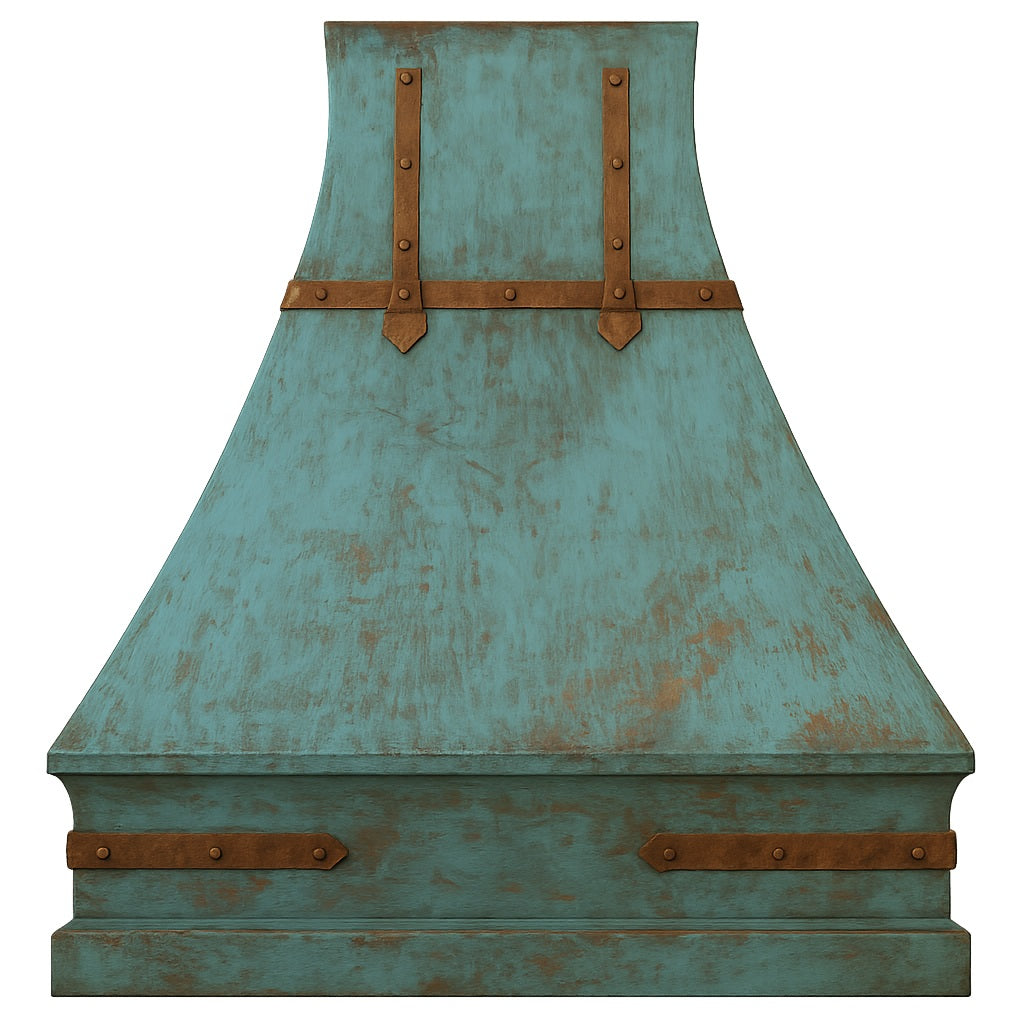
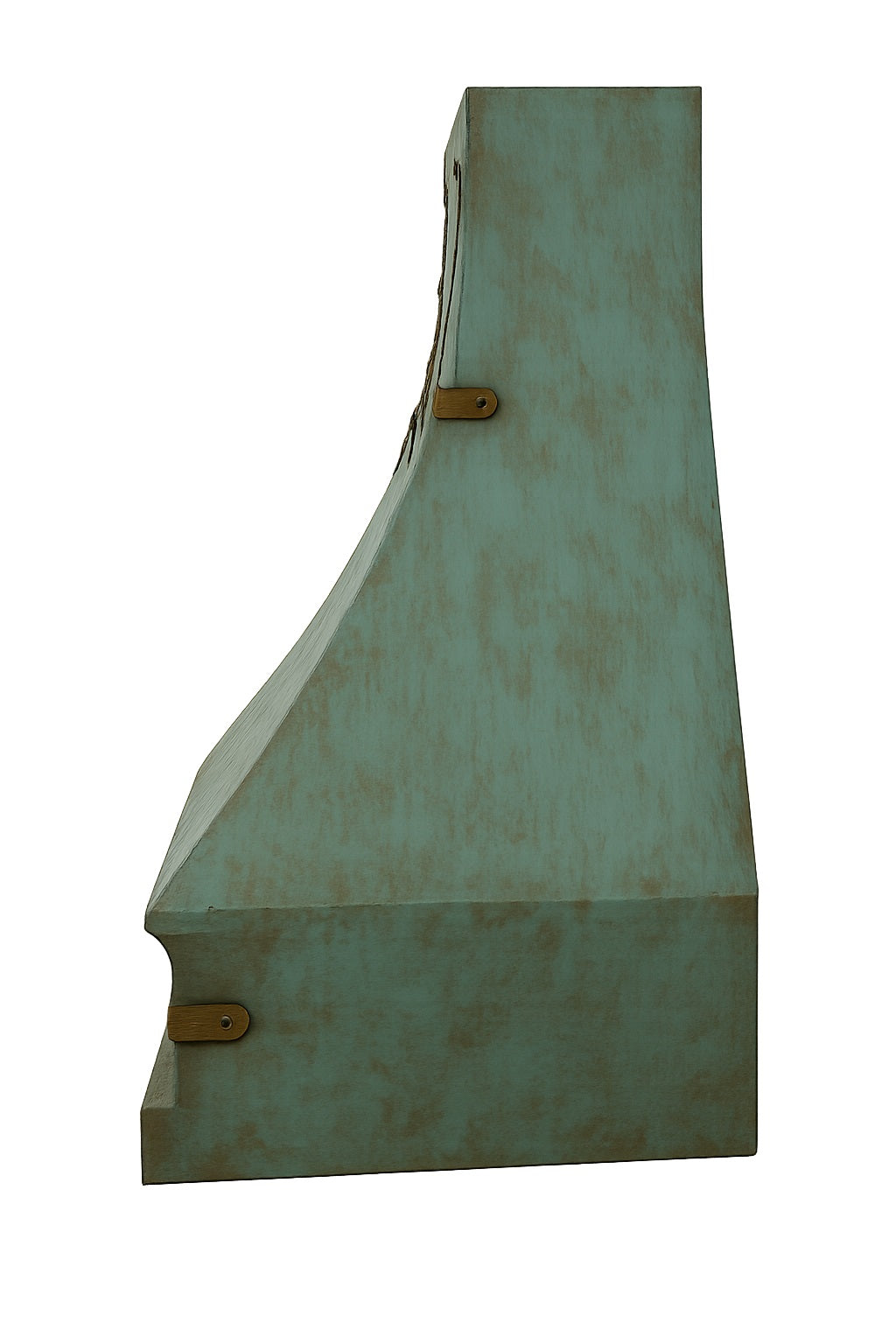
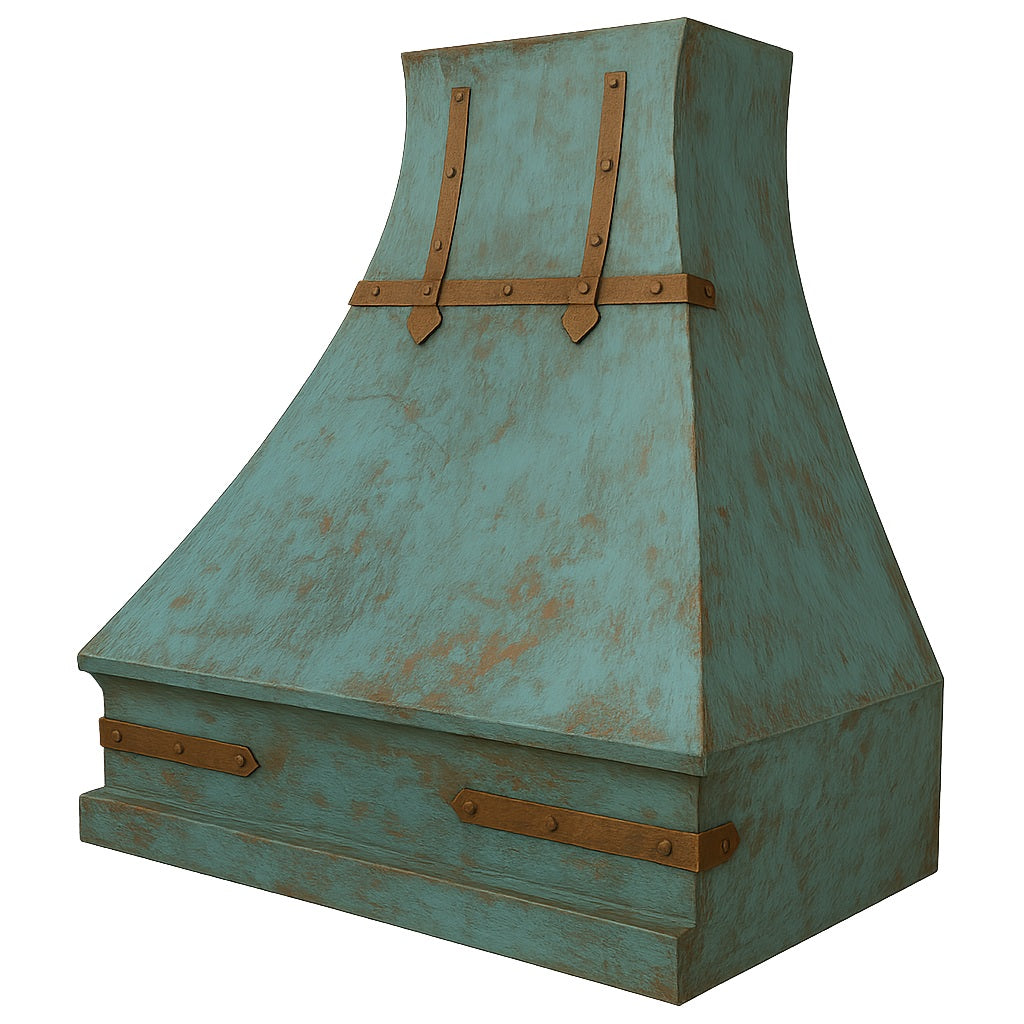
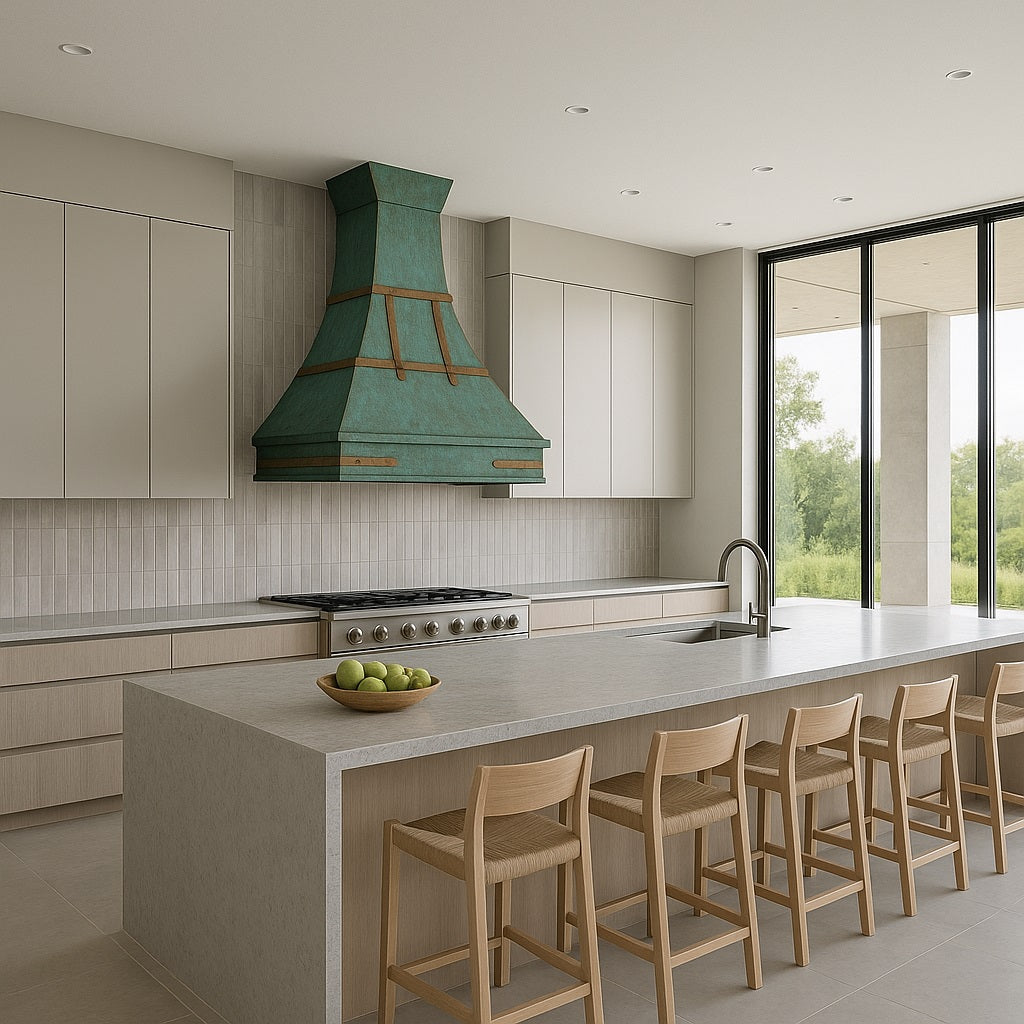
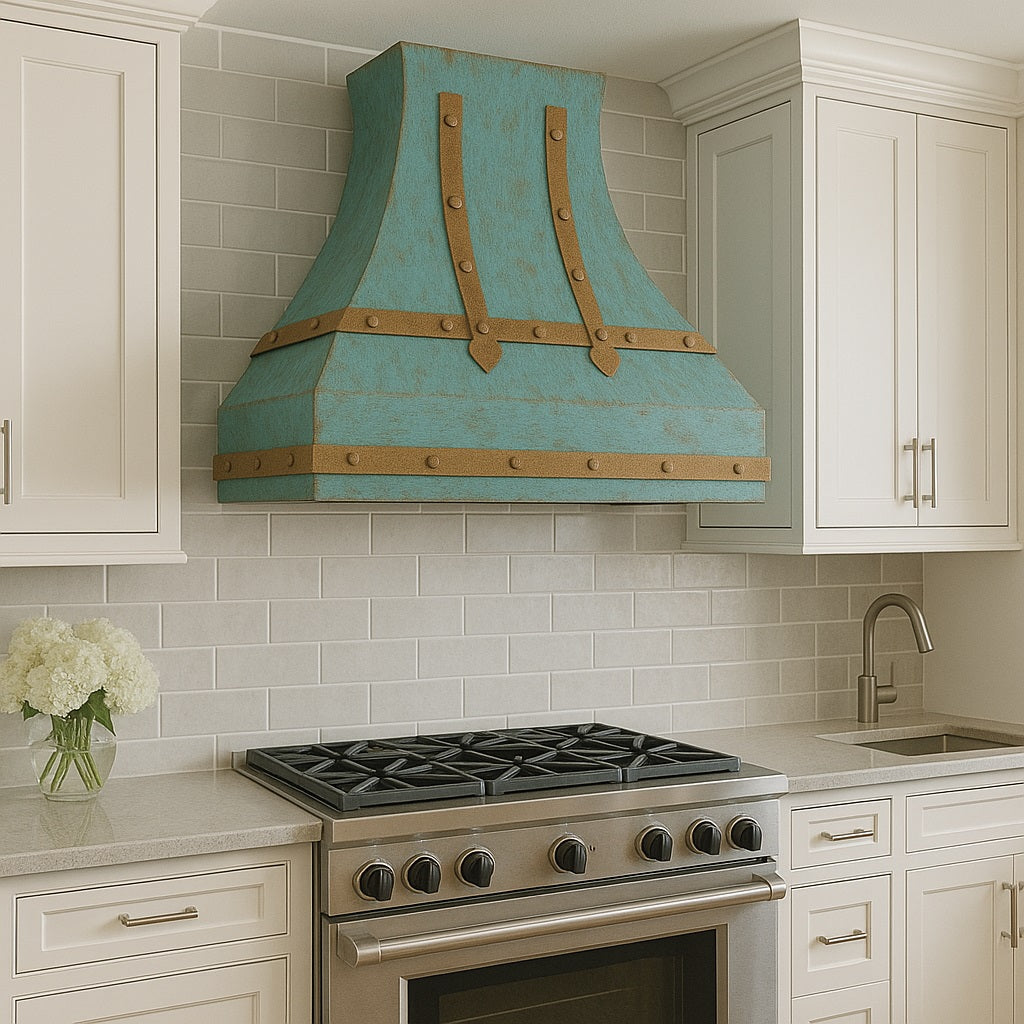
The Oxidized Copper Range Hood with Bronze Straps and Rustic Patina is hand-forged from solid copper with a weathered turquoise-green finish, organic russet and brown shading, dark bronze straps, rounded rivets, and decorative spear-tip ends. Its flared bell body rises into a crisp rectangular chimney and finishes with a squared apron featuring tiered molding. Choose wall-mount or kitchen-island construction, widths of 30, 36, 48, or 60 inches, and heights of 24, 36, 48, or 60 inches. The oxidized finish gives every hood unique tonal movement suited to Spanish Colonial, Mediterranean Revival, Hacienda, Mission, farmhouse, and rustic-industrial kitchens. Explore more custom copper range hood designs. Configure this historic-looking copper centerpiece for your kitchen.
Product Summary
- Material: hand-forged solid copper
- Sizes: 30–60"W; 24–60"H
- Finish: oxidized turquoise patina
- Mounting: wall or island
- Detail: bronze spear-tip straps
Historic Oxidized Character
This hood recreates the depth and irregular coloring associated with naturally aged architectural copper. Turquoise-green oxidation, russet undertones, brown shading, and a matte surface give the piece the established appearance of antique domes, historic roofs, and weathered exterior metalwork.
Turquoise-Green Copper Patina
The oxidized body displays changing green and turquoise tones rather than a uniform painted color. Variations emerge across the front, sides, seams, curves, chimney, and apron, giving every handmade hood an individual finish pattern.
Russet and Brown Undertones
Warm russet and brown areas remain visible beneath the cooler oxidation. These colors connect the green patina to wood cabinetry, terracotta tile, bronze hardware, brick, stone, and other natural materials commonly used in Old-World kitchens.
Hand-Aged Copper Surface
The copper has a smooth but intentionally distressed surface with irregular shading and organic oxidation. Its visual texture comes from controlled aging and natural color movement rather than a mechanically uniform coating.
Matte Antique Finish
A matte sheen reinforces the aged appearance and reduces bright reflections. Soft light reveals the changing patina, curved body, raised straps, rivets, spear-tip ends, and tiered apron without creating a polished contemporary look.
Flared Bell Body
The lower canopy widens gradually above the cooking surface, producing a substantial bell-shaped silhouette. Its controlled flare balances the narrow chimney and provides the architectural presence needed above a broad range or central cooking island.
Rectangular Copper Chimney
A straight rectangular chimney rises from the curved canopy toward the ceiling. Crisp edges add structural definition and create a deliberate contrast against the organic oxidation and gently flared body.
Squared Tiered Apron
The lower edge is finished with a squared apron and layered molding. This tiered construction anchors the bell body, frames the ventilation opening, and provides a strong horizontal counterpoint to the vertical chimney and straps.
Contrasting Bronze Straps
Dark bronze straps extend vertically across the oxidized copper body. Their warmer metallic tone stands apart from the turquoise-green surface, emphasizing the hood’s proportions and creating the appearance of traditional forged reinforcement.
Rounded Rivet Detailing
Visible rivets add rhythm and handcrafted depth along the straps. Their repeated spacing complements wrought-iron fixtures, hammered cabinet hardware, rustic hinges, aged-bronze faucets, and other metal details used throughout traditional interiors.
Decorative Spear-Tip Ends
Each strap finishes with a pointed spear-tip detail near the lower body. These forged-looking ends introduce a restrained ornamental element inspired by historic ironwork without covering the entire hood in scrolls or embossed decoration.
Architectural and Organic Balance
The hood combines structured geometry with irregular natural color. Its chimney, apron, straps, and rivets provide architectural order, while the oxidized finish introduces softness, variation, and the appearance of long-term weathering.
Handcrafted Copper Construction
Each hood is individually cut, shaped, joined, aged, strapped, riveted, and finished by skilled metalworkers. Handmade production allows its dimensions, mounting configuration, strap arrangement, apron proportions, chimney height, and ventilation opening to follow the confirmed project requirements.
Design Features and Planning
The table connects the hood’s principal features with the design and installation decisions they influence. Review its scale, patina, strap placement, structural support, ventilation equipment, duct route, and surrounding materials before production.
| Feature | Design Effect | Planning Focus |
|---|---|---|
| Oxidized patina | Creates antique character | Color variation |
| Flared bell body | Adds sculptural volume | Range coverage |
| Bronze straps | Creates metallic contrast | Strap alignment |
| Spear-tip ends | Adds Old-World detail | Decorative scale |
| Rectangular chimney | Adds vertical structure | Duct alignment |
| Tiered apron | Anchors the canopy | Insert access |
| Island mounting | Creates a central centerpiece | Ceiling support |
Copper Hood Dimensions
Select widths of 30, 36, 48, or 60 inches and heights of 24, 36, 48, or 60 inches. Confirm the finished depth, cooking-surface dimensions, ceiling height, installation clearance, cabinet spacing, chimney route, and ventilation equipment before ordering.
Range and Hood Proportion
The hood should visually frame the cooking surface while remaining balanced with nearby cabinetry. When the layout permits, choosing a hood three to six inches wider than the range can improve vapor capture and create a more substantial architectural composition.
Height and Chimney Planning
Review the ceiling height, preferred mounting clearance, canopy height, chimney termination, crown molding, beams, soffits, and nearby architectural features. Project-specific chimney dimensions may be discussed when the standard selected height requires adjustment.
Finished Hood Depth
The finished depth should provide suitable coverage above the burners without interfering with cabinetry or normal movement. Confirm the range depth, cabinet projection, ventilation insert dimensions, and required service clearances before fabrication.
Oxidation Variation
The oxidized finish cannot be reproduced as a perfectly uniform pattern. Green, turquoise, russet, brown, and darker areas will vary in location and intensity, making every hood distinct from the product photographs and from other pieces.
Sealed Living Patina
The oxidized surface is sealed to help preserve its appearance, but copper remains a living material. Heat, humidity, sunlight, cooking residue, handling, and cleaning habits may gradually deepen or modify the finish.
Custom Strap Configuration
Strap layouts, rivet spacing, and decorative placement may be reviewed before production. Any requested change should be confirmed with dimensions or a marked reference image so the revised proportions remain balanced across the selected hood size.
Wall-Mount Construction
The wall configuration is prepared for rear framing, adjacent cabinetry, a backsplash, and a wall or roof duct route. Its front and exposed sides display the complete oxidized body while the back edge fits against the installation wall.
Kitchen-Island Construction
The island version is finished on all visible sides and requires suitable ceiling framing, accurate centering, balanced strap placement, planned ductwork, and accessible service points. Structural conditions should be reviewed before production begins.
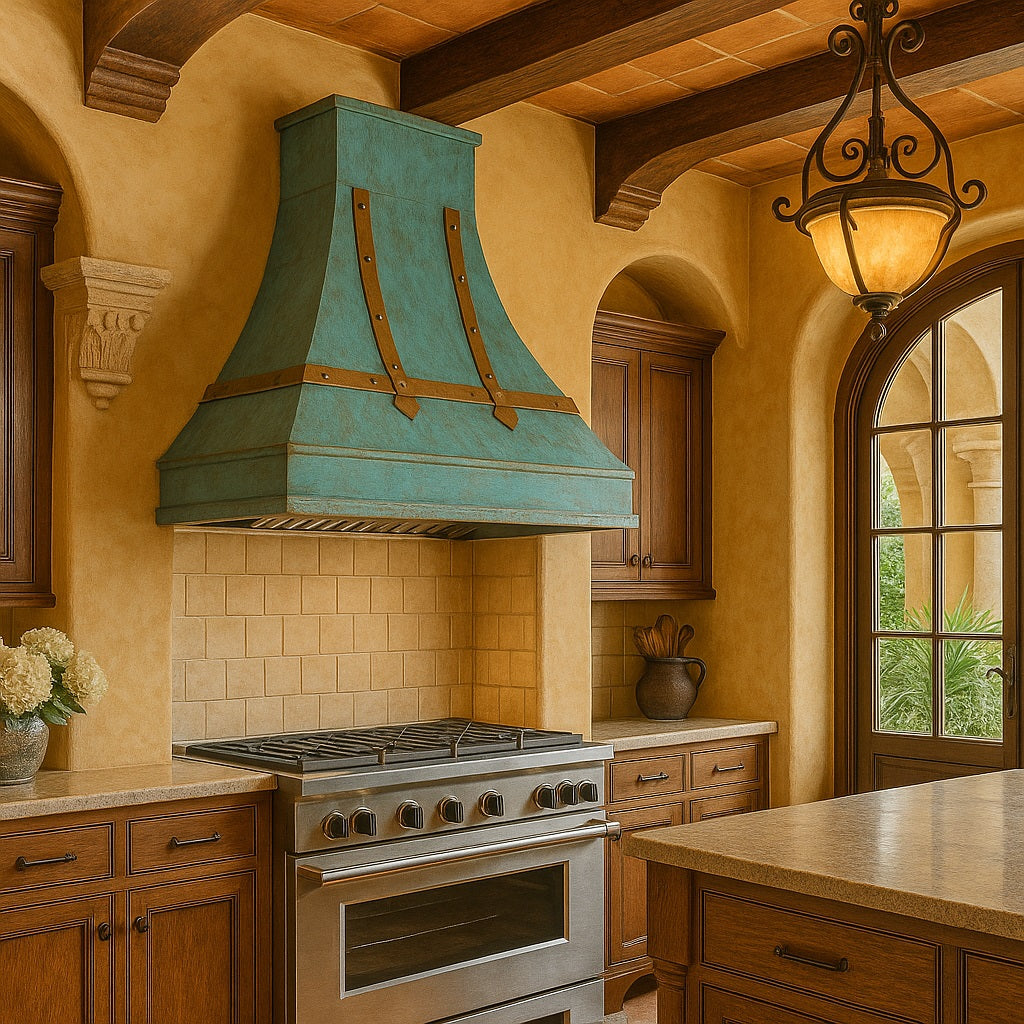
Spanish Colonial Kitchens
The turquoise patina, dark bronze straps, and spear-tip details complement plaster walls, carved wood, Talavera tile, terracotta floors, stone, and wrought-iron fixtures. The hood can become the primary historic-looking feature above the cooking surface.
Mediterranean Revival Design
Pair the hood with limestone, textured stucco, patterned tile, arched openings, warm wood, and aged-metal lighting. The oxidized surface recalls weathered copper roofs and exterior architectural details found in Mediterranean-inspired buildings.
Hacienda Style Interiors
The flared body and handcrafted strapwork work naturally with heavy beams, masonry, hand-painted tile, rustic cabinetry, and forged iron. Turquoise oxidation introduces color while preserving the earthy character of traditional Hacienda materials.
Mission Style Applications
The strong rectangular chimney, structured apron, and visible fasteners complement Mission interiors centered on natural materials and straightforward craftsmanship. Pair the hood with quarter-sawn wood, handmade tile, stone, and restrained metal hardware.
Rustic Farmhouse Kitchens
The weathered finish coordinates with reclaimed wood, painted cabinets, brick, stone counters, open shelving, and apron-front sinks. Bronze straps provide a darker accent that can connect the hood to cabinet pulls, lighting, and faucet finishes.
Rustic Industrial Design
Against concrete, exposed brick, blackened steel, reclaimed timber, and commercial appliances, the oxidized copper creates an organic counterpoint. Its riveted straps and tiered apron reinforce the room’s forged-metal character.
Transitional Kitchen Styling
The hood can add historic depth to Shaker cabinetry, neutral counters, modern appliances, and simplified tile. Keeping surrounding finishes restrained allows the turquoise patina and bronze strapwork to remain the principal decorative statement.
Ventilation and Insert Options
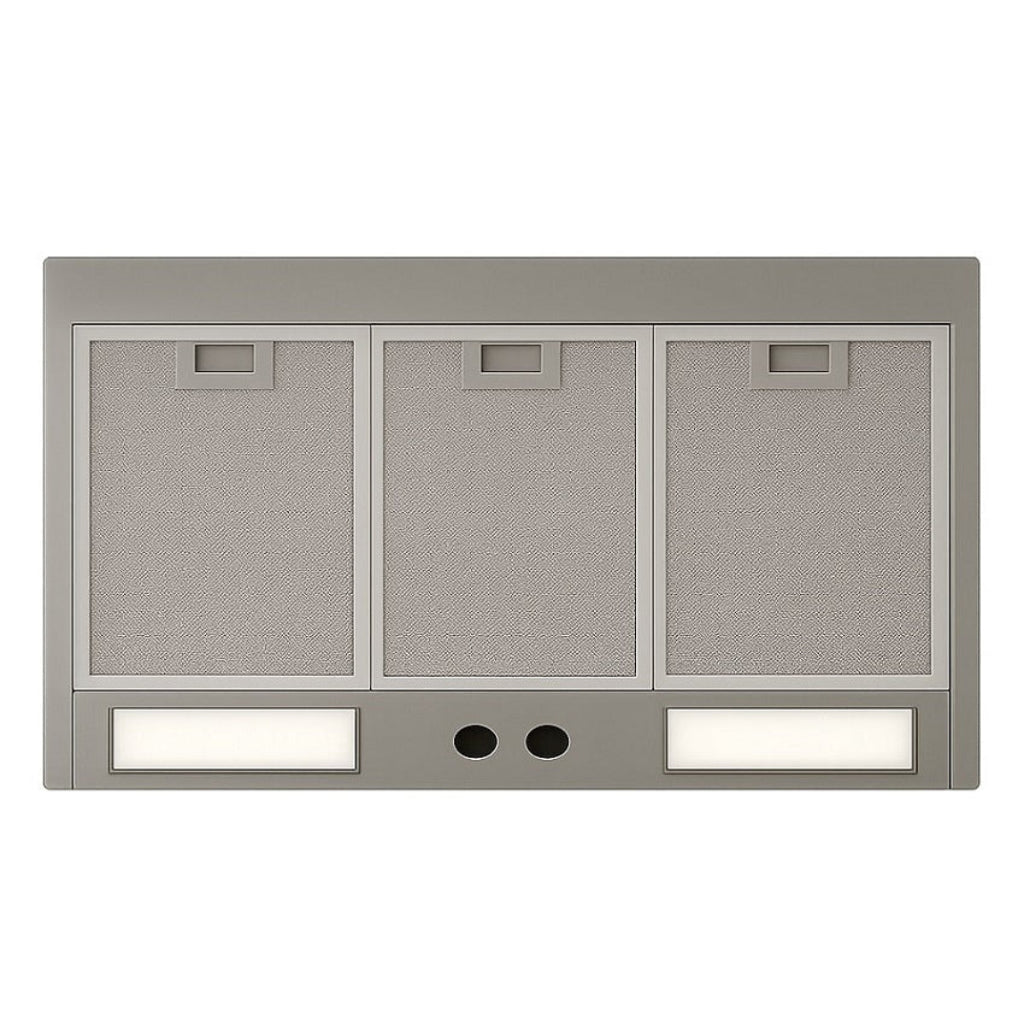
An economy 200 CFM insert may be selected. The shell can also be prepared for a buyer-supplied internal insert up to 1200 CFM or an external blower system up to 1500 CFM.
Insert Compatibility Requirements
Provide the manufacturer, model, specification sheet, overall dimensions, cutout measurements, duct diameter, discharge location, controls, lighting, filter access, electrical access, and service clearances before production.
Complimentary Interior Preparation
Interior customization for a compatible buyer-supplied insert is included when complete specifications are submitted before production. The opening and support arrangement are prepared around the confirmed equipment rather than a generic insert size.
Insert Size Guidelines
As a general guideline, the insert should be approximately six inches smaller than the hood in width and depth. Final compatibility depends on its liner, cutout, fastening, discharge, controls, lighting, and maintenance requirements.
Ducted or Recirculating Setup
The hood may be prepared for exterior ducting or a compatible recirculating insert. Confirm the discharge direction, filtration requirements, ventilation openings, electrical connections, controls, and service access before fabrication.
Selecting Ventilation Equipment
Stronger inserts are not supplied because each kitchen requires equipment matched to its appliance, cooking style, heat output, duct dimensions, duct length, elbows, termination, noise expectations, and applicable local requirements.
Insert Service Access
The selected equipment must permit practical access to filters, controls, lights, wiring, fasteners, and removable components. Confirm how the insert will be installed, cleaned, serviced, and replaced before approving the interior opening.
Measurements Before Production
Confirm the range width, hood width, hood height, finished depth, mounting type, ceiling height, installation clearance, cabinet spacing, backsplash thickness, chimney route, duct centerline, and nearby architectural features. Insert dimensions and service clearances must also be verified.
Product Specifications
- Product: oxidized copper range hood
- Material: hand-forged solid copper
- Surface: smooth and hand aged
- Finish: matte oxidized patina
- Primary tones: turquoise and green
- Undertones: russet and brown
- Body: flared bell shape
- Chimney: rectangular with crisp edges
- Apron: squared tiered molding
- Straps: contrasting bronze
- Fasteners: rounded rivets
- Strap ends: decorative spear tips
- Widths: 30, 36, 48, or 60"
- Heights: 24, 36, 48, or 60"
- Mounting: wall or island
- Standard insert: economy 200 CFM
- Internal system: up to 1200 CFM
- External system: up to 1500 CFM
- Configuration: ducted or recirculating
- Production: made to order
- Delivery: about four weeks
Ordering and Customization
- Select: wall or island mounting
- Set: the required hood width
- Set: the required hood height
- Confirm: the finished hood depth
- Review: oxidized patina variation
- Review: strap and rivet placement
- Provide: ventilation specifications
- Verify: ducted or recirculating setup
- Approve: every project measurement
Items Included and Excluded
The confirmed order includes the handcrafted copper shell and selected ventilation configuration. Installation labor, structural framing, ductwork, electrical work, penetrations, makeup-air equipment, site modifications, and professional services are excluded unless specifically stated.
Professional Installation
Qualified professionals should install the hood using structural support appropriate for the copper shell, ventilation equipment, and site conditions. The installer is responsible for mounting, ductwork, electrical service, clearances, termination, and accessible maintenance points.
Frequently Asked Questions
What makes this oxidized copper hood unique?
Its turquoise-green patina, russet shading, contrasting bronze straps, visible rivets, and spear-tip ends create a distinctive hand-aged appearance.
Will the oxidized finish match the photographs exactly?
No. The position and intensity of turquoise, green, russet, brown, and darker oxidation vary naturally on every handmade hood.
Can the strap configuration be customized?
Yes. Strap placement and rivet spacing may be reviewed when the requested changes are confirmed before production.
Does the oxidized patina require special maintenance?
Clean it gently with mild soap, warm water, and a soft cloth. Avoid abrasive pads, acidic cleaners, ammonia, and metal polish.
Can this hood be ordered for a kitchen island?
Yes. Choose island construction so all visible sides are finished and the upper structure is prepared for ceiling mounting.
What information is required for a buyer-supplied insert?
Submit its specification sheet with dimensions, duct location, controls, lighting, filters, electrical access, and service clearances.
Customize Copper Hood
Confirm the dimensions, mounting configuration, oxidation expectations, strap layout, ventilation equipment, duct route, and installation conditions before production. Order the Oxidized Copper Range Hood with Bronze Straps and Rustic Patina after every project specification has been reviewed.
Related Resources
- Custom Copper Range Hoods
- Oxidized Copper Hood with Bronze Straps Guide
- Hacienda and Spanish Revival Copper Hoods
- Request a Custom Copper Quote
Copper Care and Maintenance
Clean the oxidized copper with warm water, mild soap, and a soft cloth, then dry it carefully. Avoid acidic products, bleach, ammonia, abrasive pads, harsh degreasers, and metal polish that could alter the sealed patina.
Shipping and Returns
Average delivery is four weeks. Unused items may be returned within 30 days; review the shipping policy and refund policy.
Warranty
Manufacturing concerns are reviewed individually using order details and photographs. See the contact information before submitting a concern.
Disclaimer: Handmade oxidation, patina color, strap placement, and dimensions may vary. Lifestyle images are inspirational only. Product images are copyright protected.