

Transitional Rustic Copper Range Hood Buyer’s Guide
Creating a custom kitchen that feels both timeless and current often comes down to material choice and proportion. The transitional rustic copper range hood represents a refined balance between traditional craftsmanship and clean architectural design. Handcrafted from solid copper, this hood offers warmth, depth, and authenticity while maintaining a restrained profile that integrates seamlessly into modern, farmhouse, and Spanish-inspired kitchens.
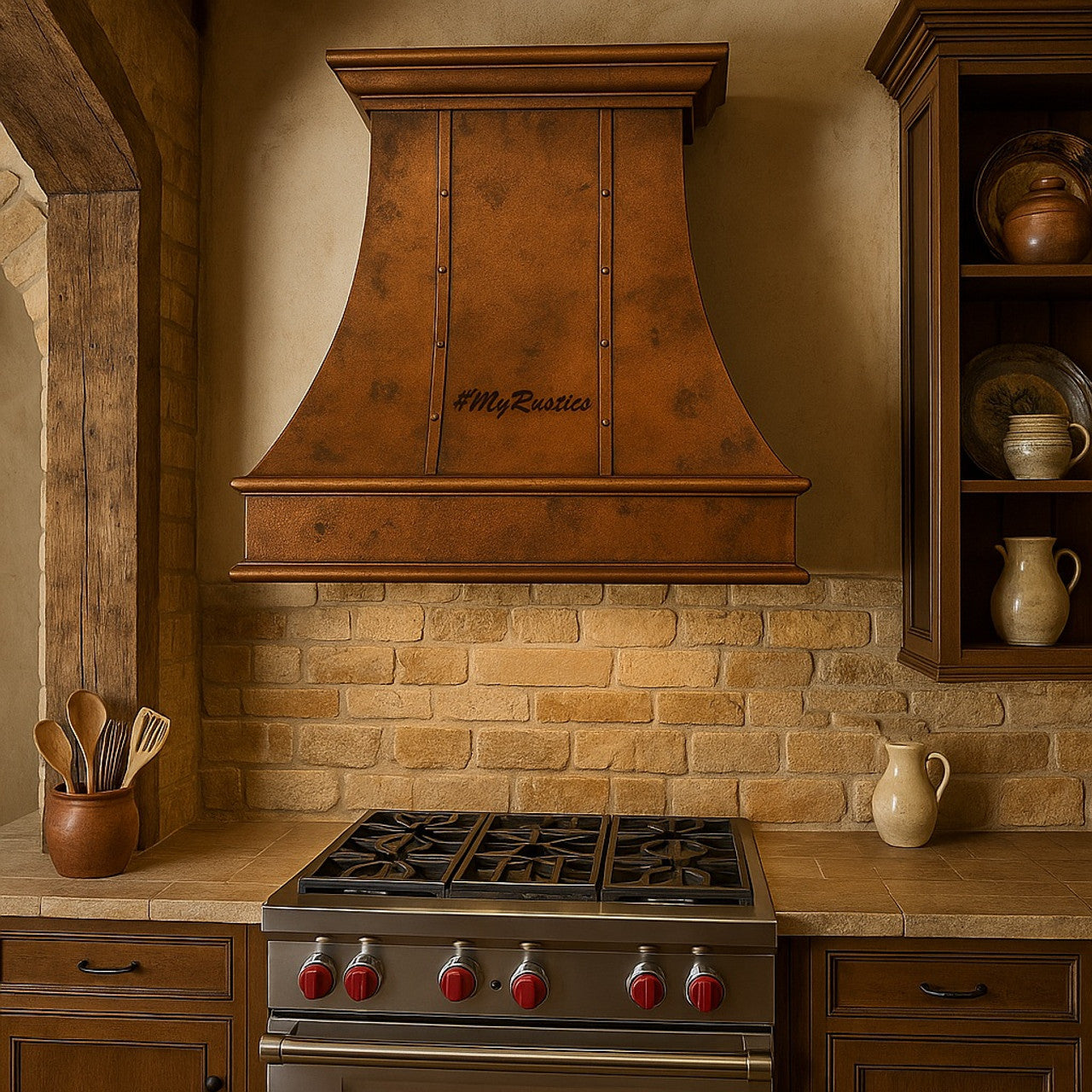
Guide to Transitional Rustic Copper Range Hoods
Understanding Transitional Rustic Style
Transitional rustic design sits at the intersection of old-world materials and contemporary simplicity. It draws from traditional craftsmanship, natural textures, and time-tested forms, while stripping away excessive ornamentation. In the kitchen, this approach results in spaces that feel warm and inviting without appearing heavy or dated.
A copper range hood is uniquely suited to this style. Copper carries historical significance and visual warmth, yet its clean lines and adaptable finishes allow it to function comfortably within modern layouts. The transitional rustic copper range hood achieves this balance through proportion, surface treatment, and thoughtful detailing.
Why Copper Works in Transitional Kitchens
Copper is one of the few materials that naturally bridges rustic and modern design. Its warm tone softens minimalist cabinetry, while its durability and authenticity reinforce traditional values. Unlike stainless steel, copper evolves over time, developing a patina that adds character rather than wear.
In transitional kitchens, copper introduces contrast without visual noise. It pairs effortlessly with white, gray, and natural wood cabinetry, stone countertops, and neutral tile backsplashes. The result is a space that feels layered, intentional, and enduring.
Design and Craftsmanship
Handcrafted Construction
Each transitional rustic copper range hood is handcrafted using traditional metalworking techniques. Sheets of solid copper are cut, annealed, and formed by skilled artisans to achieve precise geometry and structural integrity. Unlike mass-produced hoods, every piece reflects the human hand through subtle variations in tone and surface texture.
These small variations are not flaws but signatures of authenticity. They distinguish handcrafted copper from factory-finished materials and ensure that no two hoods are exactly alike.
Surface Texture and Finish
The surface finish plays a crucial role in defining the transitional rustic aesthetic. Typically, these hoods feature a lightly textured or softly hammered surface that adds depth without overwhelming the form. The texture diffuses light gently, preventing harsh reflections and enhancing warmth.
Finish options may range from natural copper tones to antique or darkened patinas. Each finish is achieved through controlled chemical and heat treatments that allow the copper to age gracefully while maintaining visual balance.
Architectural Silhouette
The silhouette of a transitional rustic copper range hood emphasizes clean geometry and proportional balance. A wider base provides strong visual anchoring above the cooktop, while the upper chimney transitions smoothly upward. This vertical movement adds presence without feeling bulky.
Edges are typically softened rather than sharply defined, reinforcing the blend of rustic character and modern restraint. The overall form feels architectural rather than decorative.
Functional Performance
Ventilation Efficiency
Beyond aesthetics, a copper range hood must perform efficiently. Transitional rustic designs are engineered to accommodate a wide range of liner inserts, ensuring proper airflow and smoke capture. The hood’s internal volume supports effective ventilation without compromising exterior proportions.
Whether installed above a standard cooktop or a professional-style range, the hood channels rising heat and vapors toward the insert efficiently, maintaining a clean and comfortable cooking environment.
Noise Control and Comfort
Proper hood sizing and insert selection contribute to quieter operation. The copper shell itself helps dampen vibration, reducing noise during use. This allows the kitchen to remain a social space even during active cooking.
Durability and Longevity
Copper is naturally resistant to corrosion and moisture, making it ideal for kitchen environments. Unlike painted or plated finishes, solid copper does not peel or chip. With minimal care, a copper range hood can last for generations while maintaining its structural and visual integrity.
Design Features
- Handcrafted solid copper construction
- Balanced transitional rustic silhouette
- Soft surface texture for visual depth
- Custom sizing and finish options
- Wall mount or island installation
Customization Options
Size and Proportion
Customization ensures that the range hood aligns perfectly with your kitchen layout. Width, height, and depth can be adjusted to match cabinetry, ceiling height, and cooktop dimensions. Proper proportion is essential in transitional design, where balance defines the overall aesthetic.
Finish Coordination
Custom finishes allow the hood to coordinate with other copper elements in the kitchen. Matching tones with hardware, lighting, or sinks creates a cohesive material story. Alternatively, contrast can be used intentionally to establish the hood as a focal point.
Compatibility with Other Copper Elements
Many homeowners pair a transitional rustic copper range hood with complementary fixtures such as copper sinks. Coordinating materials across key kitchen elements enhances visual continuity and reinforces craftsmanship. Explore options within the custom copper kitchen sinks collection to build a unified design.
Interior Style Compatibility
Farmhouse and Rustic Kitchens
In farmhouse kitchens, a transitional rustic copper range hood adds warmth and authenticity. It pairs naturally with reclaimed wood beams, apron-front sinks, and stone surfaces, reinforcing a lived-in yet refined atmosphere.
Spanish Revival and Mediterranean Spaces
Copper has deep historical roots in Spanish and Mediterranean architecture. In these interiors, a transitional hood bridges traditional influences with contemporary restraint, complementing plaster walls, hand-painted tile, and wrought iron accents.
Modern Transitional Interiors
In more modern settings, copper introduces softness and contrast. When paired with flat-panel cabinetry and minimalist lighting, the hood prevents the space from feeling sterile while maintaining clean visual lines.
Installation Considerations
Wall-Mounted Installations
Wall-mounted configurations are the most common choice. The hood aligns with upper cabinetry or tile backsplashes, creating a strong visual anchor above the cooking area. Proper mounting height ensures both visual balance and effective ventilation.
Island Installations
In open kitchens, an island-mounted copper range hood becomes a sculptural centerpiece. Transitional rustic designs work especially well in these settings, as their restrained detailing prevents visual overload in open-plan spaces.
Ducting and Insert Planning
Early coordination with installers ensures smooth integration of ducting, electrical connections, and liner inserts. Custom copper hoods are designed to accommodate modern ventilation systems without altering their exterior appearance.
Maintenance and Care
Routine Cleaning
Copper requires minimal maintenance. Clean the surface with mild soap and warm water using a soft cloth. Avoid abrasive cleaners that may damage protective finishes.
Patina Management
Some homeowners choose to preserve the original finish using wax or sealants, while others allow the copper to age naturally. Both approaches are valid. Natural patina development adds depth and authenticity rather than diminishing value.
Long-Term Value
Unlike trend-driven materials, copper improves with age. Its evolving surface tells a story of use and care, making it a lasting investment rather than a disposable appliance.
Sustainability and Craft Heritage
Responsible Material Choice
Copper is fully recyclable and environmentally responsible. Choosing a handcrafted copper range hood supports sustainable production and reduces reliance on mass-manufactured goods.
Supporting Artisan Craft
Each custom copper hood represents hours of skilled labor and generations of knowledge. By choosing handcrafted products, homeowners help preserve traditional metalworking techniques and support artisan communities.
Design Planning Tips
Achieving Visual Balance
Consider ceiling height, cabinetry style, and surrounding materials when selecting a hood design. Transitional rustic kitchens benefit from proportional restraint, allowing the hood to stand out without overwhelming the space.
Material Pairings
Copper pairs best with natural materials such as wood, stone, plaster, and ceramic tile. Avoid overly glossy synthetic surfaces nearby, which can clash with copper’s organic character.
Expanding the Design Story
To explore additional styles and configurations, browse the full selection of custom copper range hoods and build a cohesive kitchen design around handcrafted metal elements.
Conclusion
A transitional rustic copper range hood offers the ideal blend of warmth, craftsmanship, and modern restraint. Its handcrafted construction, durable material, and adaptable design make it a centerpiece that enhances both function and aesthetics. When thoughtfully integrated, it elevates the entire kitchen into a space defined by authenticity and timeless appeal.