

Antique Flared Copper Range Hood for Pueblo Revival Kitchens
If you want a kitchen focal point that feels architectural, warm, and genuinely handcrafted, this antique flared copper range hood delivers Old World presence without needing ornate cabinetry. This style is defined by its flared, faceted body and stepped crown molding, creating a silhouette that reads strong and refined at the same time. The surface is lightly hammered and finished in a deep aged brown patina with chestnut and charcoal undertones, which adds depth and helps the copper feel established from day one.
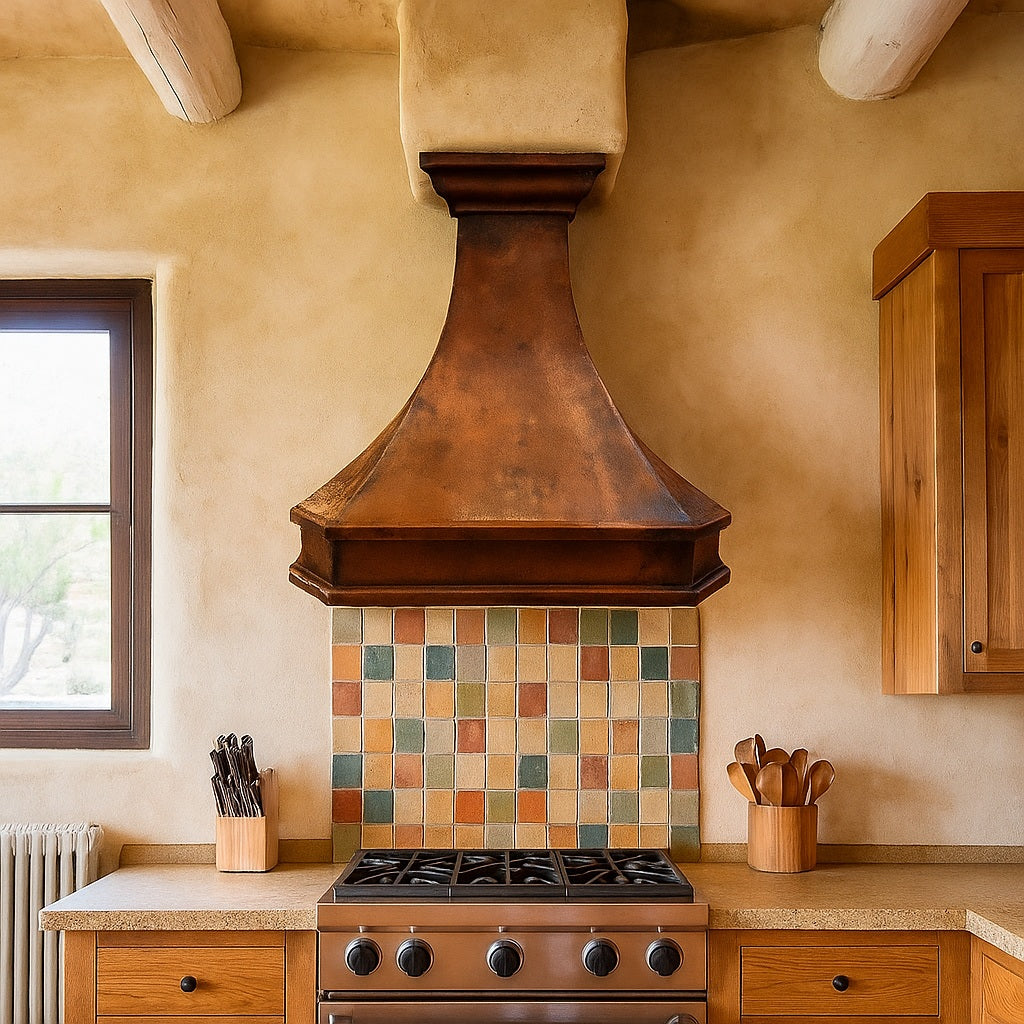
In Pueblo Revival homes, the hood becomes a natural continuation of plaster walls, vigas, and stone accents. It also blends beautifully with Spanish Revival, Tuscan, and Mexican Colonial interiors where copper is meant to look timeless rather than shiny.
Why the Flared, Faceted Shape Works
The flared profile is more than a decorative choice. Visually, the wider base grounds the hood over the cooktop, while the tapered upper section keeps the mass from feeling bulky. The faceted body adds crisp planes that catch light differently across the patina, giving the hood dimension even in softer evening lighting. A stepped crown molding finishes the top with a tailored, furniture-like edge that feels right in heritage-inspired kitchens.
Material and Finish That Read Authentic
This hood is built from thick-gauge solid copper and formed by artisans, then finished with a low-gloss antique tone. The lightly hammered surface is intentionally restrained: it adds movement and character, but it does not turn the hood into a heavily dimpled statement. The aged brown patina brings layered warmth that pairs well with stone backsplashes, wood beams, and wrought iron accents.
Design Pairings for Pueblo Revival and Southwestern Spaces
Pueblo Revival kitchens often rely on earthy materials and strong geometry. The antique flared copper shape complements that language because it is architectural first, decorative second. Here are pairings that consistently make the copper look intentional:
- Plaster or limewash walls: the warm patina softens white and cream finishes.
- Saltillo or patterned tile: copper echoes the warm reds and browns found in clay.
- Natural stone: travertine, limestone, and granite bring depth that matches aged copper.
- Dark hardware: wrought iron and oil-rubbed bronze reinforce the Old World feel.
- Wood beams: reclaimed wood or stained beams balance the hood’s metal presence.
Wall Mount vs Island Install
This design is offered for wall-mounted installation and can be configured for an island layout as well, depending on your kitchen plan.
Wall mount works best when you want the hood to read as part of the back wall composition, especially with plaster, tile murals, or a stone feature backsplash.
Island installation turns the hood into a 360-degree centerpiece. If you have open sightlines from a living area, the flared profile helps the hood look balanced from multiple angles.
Sizing and Proportions That Look Right
The best copper hood designs feel built in, not tacked on. Start by matching the hood width to your cooktop width, then consider adding a little extra width for stronger capture and a more intentional presence. Standard width options commonly include 30, 36, 48, and 60 inches, with multiple height options depending on ceiling and chimney needs.
Proportion tips that keep this flared silhouette looking sharp:
- Keep the flare visible: avoid surrounding the hood with bulky upper cabinets that hide the taper.
- Use the crown line: align the stepped crown with nearby trim details when possible.
- Balance chimney height: taller ceilings often look best with a taller chimney section for a finished vertical line.
Vent Insert Planning
The hood is designed to be compatible with vent inserts, so you can choose performance that matches your cooking style and ducting layout.
Before you order, confirm:
- Insert brand and model (or at least insert width)
- Duct location (top or rear) and duct size
- Mounting type (wall or island) and ceiling height
- Preferred hood width, height, and depth
Care and Patina Expectations
Antique copper is meant to look alive. Over time, the patina can deepen slightly, especially around edges and high-touch areas. For routine care, use mild soap and a soft cloth, then dry the surface to reduce spotting. Avoid abrasive pads and harsh acids that can strip or streak the finish.
Where to Explore More Styles
If you are comparing silhouettes, finishes, and installation types, browse the custom copper range hoods collection to see other profiles that fit Spanish Revival, Pueblo Revival, Hacienda, and transitional rustic kitchens.
Bring Old World Copper Warmth Into Your Kitchen
An antique flared copper hood works because it combines structure with warmth. The faceted flare adds architectural presence, the stepped crown gives a finished edge, and the aged brown patina delivers depth that looks right against plaster, stone, tile, and wood. If you want a centerpiece that feels handcrafted and enduring, start with the antique flared copper range hood and tailor the size and configuration to your space.
Disclaimer: Each copper hood is handmade. Variations in patina, texture, and seams are natural and enhance authenticity. Lifestyle images are inspirational and may not reflect exact proportions. All product images © Custom Copper Furnishings, unauthorized use is prohibited.