

Aged Patina Copper Range Hood | Buyer’s Guide
Aged copper finishes bring depth, warmth, and authenticity to kitchen design, especially when paired with balanced architectural forms. The aged patina copper range hood in a transitional rustic style embodies this balance by combining traditional metal craftsmanship with refined proportions. Designed for kitchens that bridge rustic character and modern restraint, this handcrafted copper hood serves as both a functional ventilation element and a lasting design centerpiece.
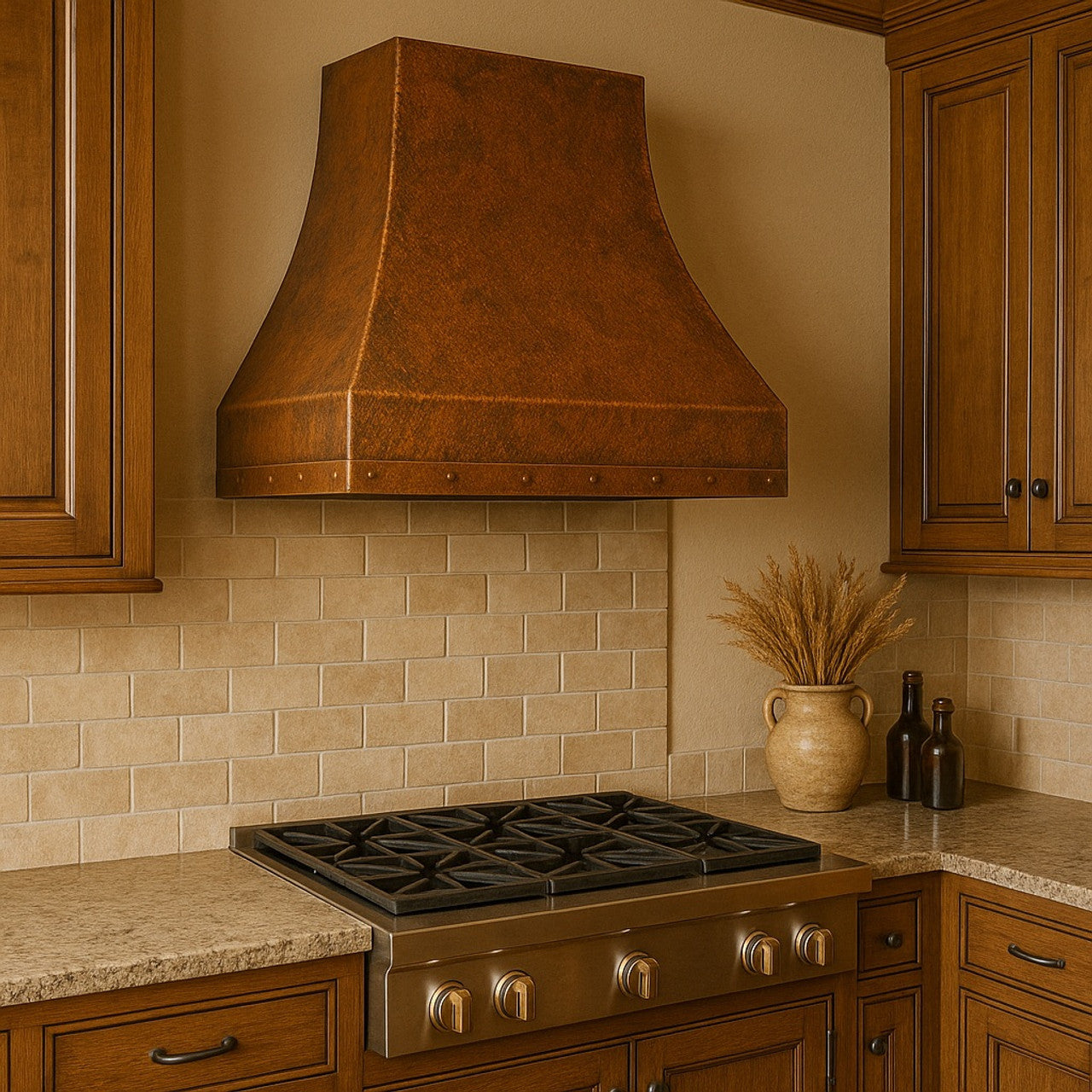
Guide to Aged Patina Copper Range Hoods
What Defines Transitional Rustic Design
Transitional rustic design blends traditional materials with clean, contemporary structure. It avoids heavy ornamentation while preserving warmth and authenticity. This approach works particularly well in kitchens, where natural textures and timeless forms create inviting yet sophisticated environments.
An aged patina copper range hood fits seamlessly within this design philosophy. The patina introduces organic variation and visual depth, while the hood’s geometry maintains clarity and balance. The result is a kitchen focal point that feels grounded, intentional, and enduring.
The Appeal of Aged Copper Finishes
Aged patina copper finishes replicate the rich tones that copper naturally develops over time. Deep browns, muted bronzes, and subtle charcoal notes create a surface that feels storied and established rather than new and reflective.
This finish is especially effective in transitional rustic kitchens because it softens clean lines and integrates naturally with wood cabinetry, stone countertops, and textured wall surfaces. The aged appearance communicates permanence and craftsmanship rather than trend-driven design.
Craftsmanship and Construction
Handcrafted Copper Forming
Each aged patina copper range hood is handcrafted from solid copper sheets selected for strength and consistency. Skilled artisans cut, shape, and assemble the copper by hand, forming the hood’s body with precision and care. This process ensures structural integrity while allowing for subtle surface variation that defines true craftsmanship.
Unlike factory-produced hoods, handcrafted copper pieces reflect the maker’s hand. Minor tonal shifts and texture variations are intentional and contribute to the hood’s authenticity.
Patina Development Process
The aged patina finish is achieved through controlled chemical and heat treatments that accelerate copper’s natural aging process. Artisans guide this reaction carefully to achieve depth without sacrificing uniformity.
The result is a finish that appears naturally aged, with layered coloration that highlights seams, edges, and transitions. This depth enhances the hood’s sculptural qualities and reinforces its rustic influence.
Structural Integrity
Beyond aesthetics, the hood’s construction prioritizes durability. Reinforced seams, precise joints, and thick-gauge copper ensure long-term performance. Copper’s resistance to corrosion and moisture makes it ideal for demanding kitchen environments.
Functional Performance
Ventilation Efficiency
A transitional rustic copper range hood must perform as well as it looks. These hoods are designed to accommodate modern liner inserts that efficiently capture smoke, steam, and cooking odors. The internal cavity supports proper airflow without compromising the exterior design.
The hood’s proportions help guide rising air naturally toward the insert, improving capture efficiency and reducing lingering odors.
Noise Reduction
Copper’s density helps absorb vibration, contributing to quieter operation compared to thinner metal alternatives. When paired with a properly sized insert, the hood supports a comfortable cooking environment without excessive noise.
Longevity and Reliability
Solid copper does not rust, peel, or delaminate. Over time, the aged patina becomes richer rather than deteriorating. This makes a copper range hood a long-term investment rather than a disposable appliance.
Design Features
- Handcrafted solid copper construction
- Aged patina transitional rustic finish
- Balanced architectural silhouette
- Custom sizing and proportions
- Wall or island installation options
Customization Options
Size and Scale
Custom sizing allows the hood to align perfectly with cabinetry, ceiling height, and cooking surface width. Transitional rustic kitchens rely heavily on proportion, making size customization essential for visual harmony.
Finish Coordination
The aged patina can be adjusted in tone to coordinate with surrounding materials. Lighter patinas pair well with white or natural wood cabinetry, while darker finishes complement deeper wood tones and stone surfaces.
Pairing with Other Copper Elements
For cohesive kitchen design, many homeowners pair a copper range hood with complementary fixtures. Coordinating materials across focal elements strengthens visual continuity. Explore matching options within the custom copper kitchen sinks collection to create a unified material palette.
Interior Style Compatibility
Rustic and Farmhouse Kitchens
In rustic settings, the aged patina finish reinforces warmth and authenticity. It pairs naturally with exposed beams, stone floors, and apron-front sinks, creating a kitchen that feels grounded and welcoming.
Spanish Revival and Mediterranean Interiors
Copper has long been associated with Spanish and Mediterranean architecture. In these kitchens, an aged patina hood complements plaster walls, hand-painted tile, and wrought iron accents while maintaining transitional restraint.
Modern Transitional Spaces
In more contemporary kitchens, the hood introduces texture and warmth that softens minimalist cabinetry. The aged finish prevents the space from feeling overly sleek or sterile.
Installation Considerations
Wall-Mounted Configurations
Wall-mounted installations are the most common choice. Proper alignment with cabinetry and backsplash ensures visual balance. Installation height should account for both safety and effective ventilation.
Island Installations
Island-mounted copper hoods act as sculptural centerpieces. Transitional rustic designs work well in open kitchens because their detailing remains refined rather than overpowering.
Ducting and Insert Planning
Early coordination with installers allows for seamless integration of ducting, lighting, and electrical components. Custom copper hoods are designed to conceal modern ventilation systems while preserving exterior aesthetics.
Maintenance and Care
Routine Cleaning
Clean the copper surface using mild soap and warm water with a soft cloth. Avoid abrasive cleaners or acidic solutions that could alter the patina.
Patina Preservation
Some homeowners choose to seal the finish with wax to slow further aging, while others allow natural evolution. Both approaches are valid, and the finish will remain attractive either way.
Long-Term Value
Unlike painted or coated materials, copper improves with age. The aged patina deepens over time, adding character rather than showing wear.
Sustainability and Craft Heritage
Environmentally Responsible Material
Copper is fully recyclable and sustainable. Choosing a handcrafted copper range hood reduces reliance on mass-produced materials and supports responsible design practices.
Preserving Artisan Skills
Each custom copper hood reflects generations of metalworking knowledge. Supporting artisan-made products helps preserve these skills and traditions.
Design Planning Tips
Achieving Visual Balance
Consider ceiling height, cabinetry style, and surrounding finishes when selecting a hood. Transitional rustic kitchens benefit from balanced proportions rather than oversized features.
Material Pairings
Copper pairs best with wood, stone, plaster, and ceramic tile. Avoid highly reflective synthetic materials that may clash with the organic patina.
Exploring Additional Styles
To compare finishes and silhouettes, explore the full range of custom copper range hoods and identify the design that best complements your kitchen.
Conclusion
An aged patina copper range hood offers a refined blend of craftsmanship, warmth, and architectural clarity. Its transitional rustic design allows it to adapt across styles while remaining a lasting focal point. With proper planning and customization, it becomes more than a ventilation element—it becomes a defining feature of the kitchen’s identity.